

close
Choose Your Site
Global
Social Media


Views: 0 Author: Site Editor Publish Time: 2026-05-29 Origin: Site


In disaster zones or remote industrial sites, water infrastructure is either non-existent or heavily compromised. Relying on bottled water logistics proves costly, slow, and operationally fragile. When supply chains break, communities and field crews face immediate survival risks. Decentralized, plug-and-play treatment units have completely shifted this paradigm. They offer utility-grade water security without requiring extensive civil engineering. These independent systems can turn compromised sources into safe drinking water within hours.
To transition from vulnerability to self-reliance, stakeholders must rethink their procurement strategies. You must evaluate these solutions not just on filtration precision, but on deployment speed, power autonomy, and operational sustainability. Capitalizing on modern technology means looking beyond basic flow rates. By understanding core filtration mechanics and logistical demands, you can build a highly resilient water strategy. The following guide explores how to select, deploy, and maintain these advanced systems effectively.
CAPEX & Time Savings: Factory-assembled units eliminate prolonged civil construction, allowing deployment in hours rather than months.
Risk Mitigation: Systems succeed or fail based on logistical realities (power, consumables, operator skill) rather than theoretical filtration limits.
Scalable Architecture: A phased approach—starting with rapid-response mobile units and scaling to containerized community systems—ensures long-term resilience.
Technology Matching: Selecting the right membrane technology and pre-treatment protocol is critical for handling fluctuating disaster-zone water chemistry.
Traditional municipal water builds demand stable ground, secure supply chains, and years of planning. You simply cannot wait for concrete to cure during an active crisis. Conversely, trucking in bottled water scales poorly. It introduces massive plastic waste and creates severe logistical bottlenecks. Roads wash out. Trucks break down. Bottled water eventually runs out.
The solution lies in modular engineering. A packaged water treatment system functions as a pre-engineered, skid-mounted, or containerized unit. These units seamlessly integrate clarification, filtration, and disinfection into one cohesive footprint. They arrive ready to operate. You bypass the complex construction phases entirely.
From a financial and operational standpoint, the advantages are undeniable:
CAPEX Reduction: Factory-built standardization creates predictable costs. You face zero civil construction delays. Engineering teams pre-assemble and test the plumbing beforehand.
OPEX Efficiency: High automation minimizes operational burdens. Programmable Logic Controllers (PLC) and SCADA integration remove the need for specialized on-site engineers. Routine tasks run automatically.
Asset Mobility: These units are never sunk costs. Once an initial crisis resolves, you can easily relocate them. They move fluidly to new mining camps, military bases, or subsequent disaster zones.
This mobility fundamentally changes crisis budgeting. You invest in a reusable asset rather than temporary, disposable aid.
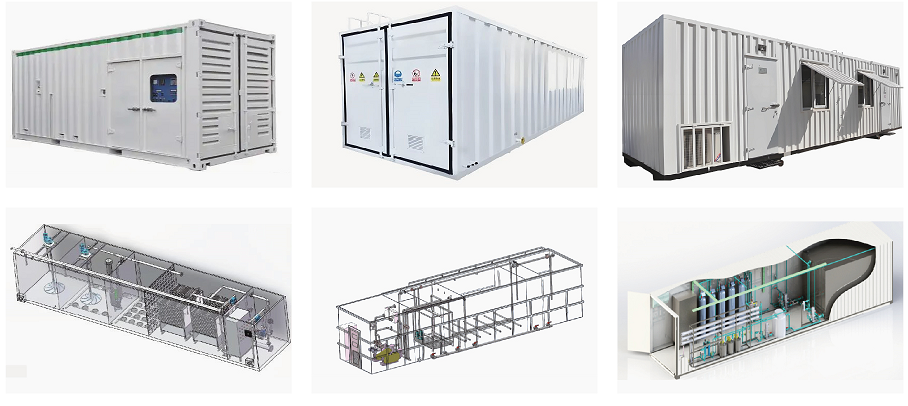
Not all water threats require the same response. Evaluating your core technology ensures you deploy the right treatment train. Different contamination profiles dictate specific filtration methods. Applying the wrong technology wastes energy and risks public safety.
These methods are ideal for high-turbidity surface water. Rivers and lakes often contain heavy sediment loads after storms. UF and MF operate at low pressures, saving vital energy. They effectively block bacteria, cysts, and suspended solids. However, they do not remove dissolved salts or heavy metals. Use them when your primary threats are biological pathogens and mud.
RO remains necessary for desalination during coastal deployments. It is also crucial for mitigating chemical spills and heavy metal contamination. RO pushes water through extremely tight membranes, stripping away dissolved solids. Note the trade-off here. RO requires significantly higher energy inputs. It also produces a concentrated brine stream. You must manage this brine carefully to avoid secondary environmental damage.
Membrane selection determines system longevity. In harsh environments, engineers highly recommend utilizing flat sheet membrane elements. They offer exceptional resistance to fouling. High-turbidity disaster scenarios quickly clog standard filters. Flat sheet designs maintain their flux rates better under heavy sediment loads. Furthermore, operators find them much easier to clean mechanically compared to traditional hollow-fiber alternatives.
Filtration alone cannot guarantee long-term safety. You must implement overlapping disinfection layers. Ultraviolet (UV) light neutralizes viruses and bacteria instantly. However, UV requires crystal-clear water. Pathogens can hide behind microscopic sediment particles in murky water. Therefore, you must pair UV with physical filtration. Finally, stabilize the treated water using chlorine injection. Chlorine provides a lasting residual barrier. This ensures safe long-term storage in community tanks or bladders.
Chart: Technology vs. Water Threat Comparison | |||
Technology Type | Target Contaminants | Energy Requirement | Ideal Deployment Scenario |
|---|---|---|---|
Microfiltration (MF) | Suspended solids, large bacteria | Low | Basic surface water cleanup |
Ultrafiltration (UF) | Bacteria, viruses, fine sediment | Low to Medium | Post-flood river water, muddy sources |
Reverse Osmosis (RO) | Dissolved salts, heavy metals, PFAS | High | Coastal desalination, chemical spills |
UV Disinfection | Active biological pathogens | Medium (Continuous) | Final-stage biological neutralization |
Buying emergency infrastructure based solely on flow rates invites failure. A system producing 10,000 Gallons Per Day (GPD) on paper might produce nothing during an actual hurricane. Guide your procurement using a multidimensional evaluation framework. You must spec a system matching real-world chaos.
Does the system feature robust pre-treatment? Floodwaters change rapidly. A calm river can become thick mud in hours. Multi-stage sand or activated carbon filters handle sudden turbidity spikes effectively. Without heavy pre-treatment, delicate downstream membranes will foul immediately.
A sophisticated purification rig is useless without electricity. Evaluate the power flexibility carefully. Look for dual-fuel generators. Consider solar-hybrid setups for extended autonomy. The unit should easily switch between 12V DC and 110V/220V AC sources. Assume the local grid no longer exists.
Match the physical form factor to your transportation vectors. How will the equipment reach the site?
Helicopter-liftable skids: Perfect for isolated mountain rescues or washed-out terrain.
ISO containers: Ideal for large camp deployments utilizing standard shipping logistics.
Truck-bed units: Best for rapid, highly mobile first-response teams moving between neighborhoods.
You cannot compromise on health metrics. Ensure the final water output strictly meets World Health Organization (WHO) drinking water guidelines. In North America, look for AWWA emergency standards compliance. Military deployments may require specialized MIL-SPEC ruggedization. Demand third-party testing documentation before purchasing.
Field experience reveals an anti-intuitive reality regarding emergency water provision. Systems rarely fail in the first 72 hours due to inadequate micron ratings. They fail because logistics collapse. Understanding these field dynamics separates successful missions from dangerous disasters.
Here are the most common points of failure, alongside actionable mitigations:
Consumable Depletion: Responders often run out of proprietary chemical reagents. Replacement filters get stuck in supply chain backlogs. The machine stops working.
Mitigation: Specify systems featuring automated backwashing. This greatly extends filter life. Additionally, mandate universal spare part kits. Do not buy systems relying on rare, proprietary cartridges.
The Storage Hygiene Gap: Producing impeccably clean water means nothing if you store it poorly. Pumping pristine water into contaminated bladders breeds new disease. Unsanitary handling ruins the entire effort.
Mitigation: Integrate strict hygiene management into the deployment plan. Always utilize residual chlorination. Train staff thoroughly on proper tap and hose sanitation protocols.
Operator Overwhelm: Highly complex software interfaces lead directly to user error. Stressed, exhausted volunteers will press the wrong buttons. Complex valve sequences confuse first responders.
Mitigation: Prioritize ruggedized, highly intuitive control panels. Single-button startup sequences save lives during the chaotic first-response phases. Visual flow diagrams painted on the machine help immensely.
Table: Risk Mitigation Checklist for Field Deployments | ||
Risk Category | Common Field Failure | Required Hardware Feature |
|---|---|---|
Power | Generators run out of specific fuel types | Dual-fuel capability, solar-trickle chargers |
Operations | Untrained locals break delicate valves | Single-button PLC controls, ruggedized housing |
Maintenance | Membranes clog completely in 48 hours | Automated air-scour and backwash cycles |
Health | Clean water grows algae in storage tanks | Automated inline chlorine dosing pumps |
Separating reliable engineering partners from basic equipment assemblers requires strict vetting logic. Anyone can bolt a pump to a filter. True resilience requires deep engineering expertise. When searching for a capable package wastewater treatment plant manufacturer, you must ask hard questions.
First, demand proven operational boundaries. Ask the manufacturer for verified data regarding maximum Total Dissolved Solids (TDS). Inquire about the highest turbidity levels the equipment handles before failing. Theoretical lab numbers mean very little. You need evidence drawn from real-world disaster deployments.
Second, evaluate customization against deployment speed. Can the manufacturer adjust the design life of consumables? Standard commercial systems expect filters to last five years under ideal conditions. Disaster use is different. You need high-intensity output immediately. A capable partner might engineer a unit focused on maximum short-term flow, accepting a two-year component lifespan to guarantee immediate survival volumes.
Finally, investigate their post-deployment support infrastructure. Remote locations isolate your operators. Does the manufacturer offer remote telemetry? Internet of Things (IoT) monitoring allows their engineers to guide your on-site personnel. They can monitor pressure differentials remotely. This predicts maintenance needs accurately before a catastrophic breakdown occurs. A vendor selling hardware without ongoing technical support introduces unacceptable risk.
Packaged systems successfully bridge the critical gap between immediate crisis survival and long-term infrastructural recovery. They replace fragile logistics with autonomous, reliable engineering. By prioritizing rapid deployment, power flexibility, and ruggedized components, communities can withstand severe infrastructure shocks. These modular units prove that safety does not require months of civil construction.
Do not wait for an active crisis to evaluate your water security needs. Base your procurement on harsh logistical realities. Consider power availability, asset mobility, and wildly fluctuating water quality. Move past theoretical flow rates. Focus heavily on operational sustainability and ease of use under stress.
Take proactive steps today. Contact an engineering specialist for a site-specific water analysis. Request technical specifications for containerized and skid-mounted units. Securing the right system now guarantees resilience when the unexpected inevitably happens.
A: These systems integrate rapidly. Assuming level ground and available power, crews typically make them operational within 4 to 24 hours of arriving on-site. Factory pre-assembly eliminates complex plumbing tasks, allowing first responders to initiate water production almost immediately upon delivery.
A: It entirely depends on the specific treatment train. Reverse Osmosis (RO) is strictly required for removing salt and dissolved chemicals. Conversely, Ultrafiltration (UF) excellently handles highly turbid floodwater. Advanced multi-stage systems combine both technologies to treat any source water effectively.
A: Modern systems minimize maintenance through automation. Automated backwashing and self-cleaning mechanisms handle routine debris removal. Operators typically only need to replenish disinfection chemicals and perform manual pre-filter changes periodically. Simple control interfaces allow non-engineers to manage daily tasks easily.
A: They support a strategic phased approach. Small mobile units serve immediate emergency needs temporarily. However, larger containerized systems easily serve as highly decentralized, permanent infrastructure. They often provide utility-grade water to remote communities for many years.


