

close
Choose Your Site
Global
Social Media


Views: 0 Author: Site Editor Publish Time: 2026-06-01 Origin: Site


Modern wastewater facilities face tightening environmental compliance alongside severe spatial constraints. Historically, operators relied on Conventional Activated Sludge (CAS) systems to process municipal and industrial waste. These older systems provided steady reliability for decades. However, rapid urbanization now demands more advanced, compact solutions. Membrane Bioreactor (MBR) systems have emerged as an operational necessity. Within this growing ecosystem, a specific technological evolution is taking place. Engineers are shifting toward flat sheet MBR membranes to resolve long-term fouling issues and maintenance bottlenecks.
We approach this transition objectively. MBR setups do require a higher initial capital outlay than conventional designs. Yet, the return on investment timeline shrinks rapidly today. Significant land savings and the rising value of reusable water offset the upfront expenses. In this guide, you will learn why facilities transition from CAS to MBR. We also explore performance comparisons, flat sheet design advantages, commissioning realities, and strategic sourcing logic.
Space & Footprint: MBR systems eliminate the need for secondary clarifiers, saving 30–50% in physical footprint compared to CAS.
Effluent Quality & Reuse: Physical membrane barriers yield near-zero suspended solids and pathogens, strictly meeting requirements for wastewater reuse.
Operational Stability: Decoupling Hydraulic Retention Time (HRT) from Sludge Retention Time (SRT) prevents common CAS issues like sludge bulking and enhances nitrification.
The Flat Sheet Advantage: Compared to hollow fiber designs, flat sheet membranes offer superior resistance to fouling, simplified chemical cleaning, and reliable longevity under high Mixed Liquor Suspended Solids (MLSS) conditions.
Wastewater management requires continuous adaptation to changing industrial loads and municipal growth. Traditional systems often fail when flow rates spike unexpectedly. You must evaluate the root causes driving the shift toward membrane technology.
Conventional activated sludge relies heavily on gravity. Wastewater sits in large secondary clarifiers, allowing biomass to settle at the bottom. This settling process is slow and vulnerable to disruptions. Physical membrane barriers entirely replace these gravity-based clarifiers. Membranes actively filter the effluent, separating clean water from the biomass instantly. They allow the system to absorb severe hydraulic and organic load fluctuations. You no longer worry about solid carryover during storm events.
CAS operators constantly battle sludge bulking. Filamentous bacteria overgrow, preventing the sludge from settling in the clarifier. This failure ruins effluent quality. MBR systems bypass this biological hazard entirely. They operate seamlessly at elevated Mixed Liquor Suspended Solids (MLSS) concentrations. Typical MBR setups run comfortably between 3,000 and 10,000 mg/L. The physical barrier guarantees solids remain in the biological tank, regardless of sludge settleability.
Biological treatment relies on time. Hydraulic Retention Time (HRT) measures how long water stays in the tank. Sludge Retention Time (SRT) dictates the lifespan of the biomass. In CAS systems, these two metrics remain tied together. MBR technology decouples them. Independent management fosters the growth of slow-growing microorganisms. Nitrifying bacteria, crucial for ammonia removal, thrive under long SRTs. You can maintain a massive bacterial population while pushing water through the system rapidly.
Many existing treatment plants are land-locked. Urban development surrounds them, making geographic expansion impossible. MBR retrofits offer a strategic advantage here. By dropping membrane modules directly into existing aeration basins, facilities drastically increase processing capacity. Plant managers achieve regulatory compliance upgrades without pouring new concrete or purchasing adjacent real estate.
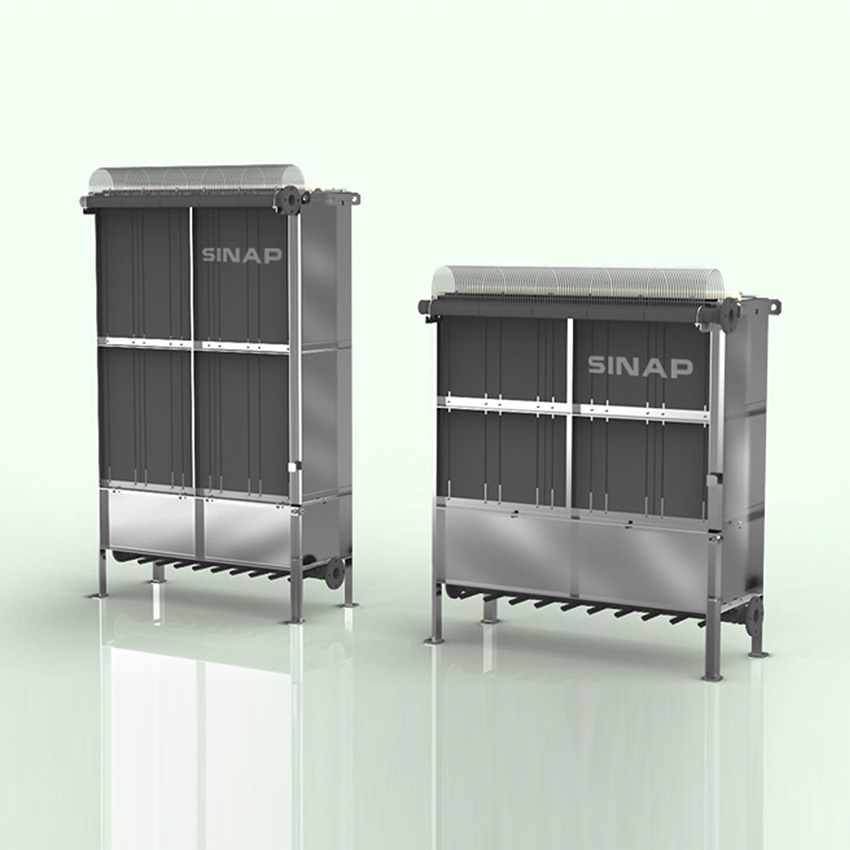
Making a structural upgrade requires a clear understanding of the trade-offs. We must evaluate effluent quality, energy demands, and capital returns objectively.
CAS output often struggles to meet strict reuse standards. Micro-pollutants and suspended solids frequently escape the clarifier. MBR systems leverage advanced microfiltration capabilities. Pores typically measure around 0.1 microns. They intercept macromolecules, bacteria, and complex micro-pollutants effortlessly. The resulting effluent is crystal clear. It is ready for irrigation, industrial cooling towers, or reverse osmosis pretreatment.
We must present energy realities transparently. CAS is traditionally highly energy-efficient. It typically consumes between 0.3 and 0.6 kWh/m³. Gravity does the heavy lifting for separation. Modern MBR systems require more power. Air scouring and suction pumps drive energy use up to 0.8–1.2 kWh/m³. However, the gap is steadily closing. Advanced aeration designs and optimized cyclical pumping reduce MBR power demands significantly.
MBR requires a 15–40% higher initial Capex than conventional plants. Membranes are engineered materials, and their supporting infrastructure is sophisticated. Yet, evaluating purely on Capex is short-sighted. Facilities typically observe a 3–8 year ROI factor. What drives this rapid payback? Reduced land acquisition costs play a massive role. Lower sludge disposal volumes cut daily hauling fees. Most importantly, the monetization of recycled water creates a new revenue stream for the plant.
Below is a summary chart comparing these distinct technological paths.
Parameter | Conventional Activated Sludge (CAS) | Membrane Bioreactor (MBR) |
|---|---|---|
Solid Separation Method | Gravity Settling (Clarifiers) | Physical Microfiltration Barrier |
Effluent Quality | Moderate (variable TSS) | Exceptional (<1 mg/L TSS, pathogen removal) |
Energy Consumption | 0.3 – 0.6 kWh/m³ | 0.8 – 1.2 kWh/m³ |
Physical Footprint | Large (requires expansive basins) | Compact (saves 30–50% space) |
Once you choose MBR technology, the next critical step is selecting the membrane geometry. The industry primarily splits between hollow fiber and flat sheet configurations.
Hollow fiber (HF) membranes consist of densely packed, flexible strands. They look like bundles of microscopic spaghetti. They sway in the water, offering a high surface area. In contrast, flat sheet models feature a rigid, modular plate design. Sturdy panels sit parallel to one another in an engineered cassette. This structural rigidity prevents the membranes from touching or tangling under high turbulence.
Fouling ruins system efficiency. Hollow fiber systems frequently suffer from "hair-balling." Hair, fibrous materials, and sticky organics agglomerate around the flexible strands. They block air scouring pathways. Flat sheet designs inherently resist this agglomeration. The rigid spacing ensures upward air bubbles scour the membrane surfaces evenly. This structural advantage means flat sheets handle high-fouling environments much better than HF. They require far less frequent manual intervention.
Operational workflow matters to the maintenance crew. When hollow fibers tangle, manual untangling is a nightmare. Some modules must be removed completely for deep cleaning. Flat sheet models simplify this workflow. They allow for straightforward in-situ chemical cleaning. Gravity feeds cleaning chemicals directly into the rigid panels. Furthermore, if a single panel gets damaged, you can easily slide it out for module-by-module replacement.
Different facilities have varying organic loads. Choosing flat sheet MBR membranes for wastewater reuse is the optimal strategy for specific environments. They excel in industrial applications, food processing plants, and municipal facilities handling complex effluent matrices. High organic loads demand a membrane that will not blind over. The flat sheet geometry guarantees consistent flux rates even when influent quality deteriorates.
Engineering theory meets practical reality during the commissioning phase. Plant managers must navigate specific biological and mechanical challenges to ensure a successful startup.
System designers must acknowledge a core engineering reality. Flat sheet systems optimize at distinctly different MLSS ranges than hollow fiber systems. HF operates best between 5 and 8 g/L. If the sludge gets thicker, the fibers clump. Flat sheet systems thrive at much higher ranges. They optimize between 12 and 15 g/L. The dense biomass actually helps scour the rigid plates, maintaining clean pores.
The transition phase is delicate. When you first seed a new MBR plant, the MLSS is naturally low. This low-concentration phase creates the "pin-floc" challenge. Pin-flocs are tiny, poorly formed biological particles. Because the sludge hasn't matured, these micro-particles easily wedge into the membrane pores. Severe pore blocking can occur during the first few weeks if operators push the system too hard.
To protect the modules during this vulnerable commissioning window, operators must implement strict start-up protocols. The following steps outline a proper mitigation strategy:
Conservative Initial Flux Rates: Operate the system well below its design capacity initially. Pulling water too aggressively will force pin-flocs deep into the membrane pores. Step up the flux gradually over several weeks.
Optimized Air Scouring: Run the aeration blowers at their maximum design rates. High shear forces generated by the coarse bubbles prevent sticky micro-flocs from adhering to the virgin membrane surfaces.
Strategic Polymer Dosing: Introduce specific conditioning polymers into the biological tank. These chemicals help bridge the small pin-flocs together into larger, healthier clumps. They also control foaming and accelerate stable biomass development.
Procuring the hardware involves more than checking a price tag. You are investing in a long-term operational asset. The right partner guarantees system longevity and compliance.
Polymer chemistry dictates membrane durability. Buyers must evaluate materials carefully. Polyvinylidene fluoride (PVDF) stands as the industry gold standard. It offers superior chemical resistance, meaning it withstands aggressive chlorine cleanings for years. PVDF also boasts exceptional anti-fouling longevity. Polyethersulfone (PES) is another option. PES is highly hydrophilic but less resilient to heavy oxidants. PES serves well in cost-sensitive, low-load municipal applications, while PVDF dominates harsh industrial settings.
Regulatory compliance hinges on separation accuracy. Advise your engineering team to verify both nominal and absolute pore sizes. A nominal rating means most pores are a certain size, but outliers exist. An absolute rating guarantees a maximum pore dimension. Consistent pore sizing ensures you meet strict mandates for direct discharge or high-grade reuse. It prevents sudden spikes in turbidity.
You are buying an engineered solution, not a commodity commodity. It is vital to partner with a reliable flat sheet membrane manufacturer. Look for vendors who provide comprehensive lifecycle support. They should offer extensive pilot testing before full-scale deployment. They must supply customized skid designs tailored to your unique flow dynamics. Post-installation operational troubleshooting is equally critical. Good manufacturers stay involved long after the commissioning phase ends.
Civil engineering costs quickly ruin project budgets. Ensure the vendor's modular designs fit seamlessly within your existing basin geometries. Custom-sized membrane cassettes prevent the need to pour new concrete walls or alter tank depths. A well-designed retrofit skid drops directly into the old aeration zone. It minimizes downtime and slashes construction expenses.
The trajectory of wastewater treatment is clear. Conventional Activated Sludge remains a viable option only for massive plants occupying abundant space. For everyone else, the landscape has changed. MBR technology is now mandatory for footprint-constrained, strict-compliance, or reuse-focused projects. It delivers unmatched water quality while slashing physical space requirements.
Specifying flat sheet technology over hollow fiber represents a strategic operational choice. You trade a marginally higher upfront capital cost for drastically lower operational headaches. The rigid plates eliminate catastrophic tangling and minimize lifecycle fouling risks.
Evaluate your facility's upcoming capacity challenges today. The logical next step for plant managers is to schedule a technical consultation. Initiate a pilot program. Test the flat sheet technology on your specific effluent stream and verify the ROI firsthand.
A: Flat sheet membranes utilize a rigid, modular geometry with optimal channel spacing. This structural design prevents the membranes from tangling or agglomerating together. The rigid channels allow coarse air bubbles to travel uniformly upward. This consistent air scouring effectively shears debris and sticky organics away from the membrane surface continuously.
A: Yes. While the initial membrane procurement cost is higher than conventional methods, the long-term financials are highly favorable. The exceptional effluent quality eliminates any need for secondary clarifiers or tertiary filtration steps. Furthermore, selling or repurposing the monetizable reuse water typically yields a net positive return on investment within 3 to 8 years.
A: Yes, retrofitting is highly feasible. Flat sheet units feature a compact, modular nature. Engineers can submerge these cassettes directly into existing aeration basins. This transforms the plant's processing capacity and improves effluent quality without requiring expensive new civil works or expanding the facility's footprint.
A: Manufacturers conduct a thorough site and influent analysis. They evaluate peak hydraulic loads, target MLSS concentrations, specific influent characteristics, and existing site dimensions. Using this data, they engineer custom, scalable membrane skids that maximize flux rates while perfectly fitting your available basin space.


