

close
Choose Your Site
Global
Social Media


Views: 0 Author: Site Editor Publish Time: 2026-05-27 Origin: Site


Premature membrane replacement is one of the largest capital drains in municipal and industrial wastewater treatment OPEX. Plant operators constantly struggle against shrinking maintenance budgets. High-quality flat sheet membrane modules typically last 5 to 8 years under ideal conditions. However, operational neglect or aggressive chemical cleaning can easily cut this lifespan in half. This early failure forces unbudgeted emergency expenses. Extending module longevity requires a firm shift in facility strategy. You must move from reactive troubleshooting to a proactive, evidence-based maintenance protocol. It means strictly monitoring transmembrane pressure (TMP) at all times. It also demands standardizing your cleaning regimens to prevent permanent pore damage. By mastering these operational variables, plant engineers can dramatically delay replacement cycles. You will learn how to balance aeration, control flux, and optimize chemical use to maximize your system's overall return on investment.
Baseline vs. Optimal Lifespan: With rigorous maintenance, the service life of a flat sheet MBR membrane can be reliably extended up to 8+ years.
The Core Threat: Irreversible flux decline caused by pore fouling and polymer degradation is the primary driver of premature module failure.
Operational Strategy: Balancing aeration scouring, precise flux control, and optimized chemical cleaning frequencies represents the highest-ROI activity for plant managers.
Replacement Trigger: Upgrading becomes more cost-effective than cleaning when chemical recovery costs exceed the energy savings of a new module.
Many operators misunderstand the true lifecycle of wastewater infrastructure. They assume a component functions perfectly until it physically breaks. This assumption proves costly in membrane bioreactors. You must redefine what constitutes the end of a module's useful life.
A module is not "dead" simply because it cracks. It reaches the end of its life when irreversible flux decline occurs. Elevated TMP makes energy consumption financially unviable. The permeate yield drops significantly. Eventually, the power required to draw water through clogged pores exceeds your energy budget. Chemical cleaning costs also surge. At this point, the module becomes a financial liability.
Premature failure brings severe hidden costs. You face emergency procurement premiums. Expedited shipping destroys capital budgets. System downtime causes operational chaos across the entire facility. If effluent quality drops, you face strict non-compliance fines from environmental regulators. Excessive chemical usage also drains your operational funds steadily.
You must understand the distinct ageing mechanisms at play. Two primary forces destroy membrane integrity over time. Mechanical wear occurs constantly during normal operations. Vigorous aeration abrasion physically wears down the membrane surface. Chemical degradation happens during cleaning cycles. Chlorine oxidation attacks the polymers. It weakens the structural bonds over time. You must balance aeration intensity against chemical exposure limits.
Failure Mode | Primary Cause | Financial Impact Area | Severity |
|---|---|---|---|
Irreversible Fouling | Over-fluxing & poor MLSS control | Excessive power consumption (suction pumps) | High |
Polymer Embrittlement | Over-exposure to NaOCl | Premature replacement CAPEX | Critical |
Surface Abrasion | Excessive aeration scouring | Effluent non-compliance fines | Medium |
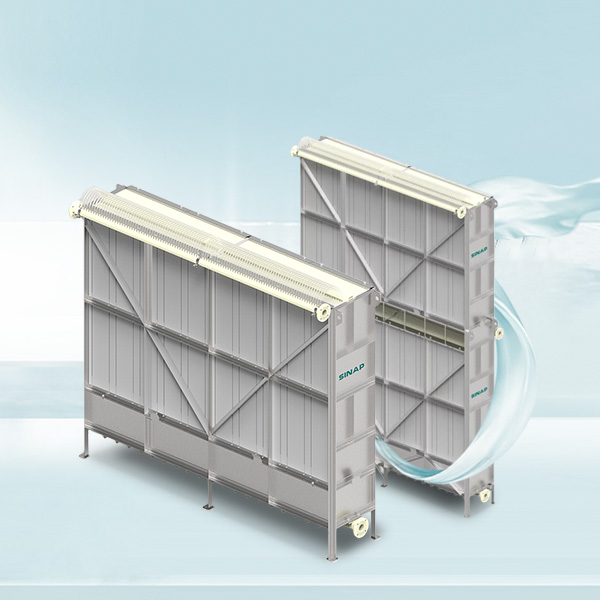
Diagnosing failure requires deep operational expertise. You must identify root causes before they compound. Several critical variables dictate how fast your system ages.
Mixed Liquor Suspended Solids (MLSS) directly dictate system health. Operating outside the optimal MLSS range causes severe problems. Too much sludge creates a thick, sticky cake layer. This layer adheres strongly to the membrane surface. It blocks water flow entirely. If MLSS drops too low, bio-flocculation fails. Fine, unagglomerated particles then enter the membrane pores. You must maintain MLSS strictly within recommended operational windows.
Aeration provides oxygen for biology. It also scours the membrane surface to remove debris. However, sub-optimal aeration destroys modules. Uneven aeration creates dead zones in the tank. Sludge accumulates rapidly in these quiet areas. It forms solid masses between the sheets. Conversely, excessive aeration causes extreme mechanical stress. Intense bubbling shakes the sheets violently. Over time, this constant physical motion damages the edge welds. You must balance airflow to scour surfaces evenly and gently.
Over-fluxing remains a widespread operational mistake. Every membrane possesses a critical flux rate. Exceeding this rate invites disaster. High suction pressure forces particles deep into the microscopic pores. These trapped particles cause irreversible fouling. Routine backwashing cannot remove them effectively. You must strictly limit your operational flux. Operating below the critical flux rate significantly extends lifespan.
Routine cleaning requires potent chemical solutions. However, excessive chemical exposure destroys advanced materials. Operators often use high doses of sodium hypochlorite (NaOCl). This chemical targets organic fouling very effectively. Unfortunately, over-exposure prematurely degrades the polymer structure of a flat sheet ultrafiltration membrane module. The material becomes brittle over time. Micro-cracks form on the active surface layer. These cracks allow raw solids into the clean permeate stream. You must follow strict chemical concentration limits during every wash.
Extending equipment life requires disciplined execution. You need standardized frameworks. Implementing evidence-based Standard Operating Procedures (SOPs) protects your investment.
You cannot manage what you do not measure. Establish a strict routine for monitoring system parameters. Detect fouling trends early before they compound into permanent damage.
Track TMP Daily: Record transmembrane pressure at consistent flux rates. Rising TMP indicates initial fouling.
Calculate Permeability: Divide flux by TMP. A dropping permeability baseline signals pore constriction.
Monitor Effluent Turbidity: Spikes in turbidity suggest physical micro-tears in the sheet.
Check Aeration Distribution: Visually inspect the surface bubbling weekly. Look for uneven distribution patterns.
Cleaning protocols dictate membrane longevity. You must balance gentle maintenance against aggressive recovery techniques.
Maintenance Cleaning, or Chemical Enhanced Wash (CEW), prevents deep fouling. You should perform CEWs frequently. Many plants run them weekly or bi-weekly. This process removes superficial biofilm build-up. It cleans the surface without stressing the membrane material excessively. You must define safe concentration limits. Keep NaOCl concentrations strictly within manufacturer guidelines to avoid oxidation.
Eventually, maintenance cleans lose effectiveness. You must then trigger an intensive offline recovery cleaning. This is known as Clean-In-Place (CIP). Plant managers typically run CIP semi-annually or annually. Outline clear threshold triggers for this event. For example, initiate CIP when TMP rises 30% above baseline. Delaying this intensive process causes permanent damage. Hardened foulants become impossible to dislodge later.
You must understand the difference between acid and alkaline treatments. Different foulants require different chemical reactions. Citric acid targets inorganic fouling specifically. It dissolves mineral scale and iron deposits. NaOCl tackles organic fouling exclusively. It breaks down persistent biofilm and sludge particles. You must diagnose the exact fouling type before selecting a cleaning chemical.
Cleaning Type | Frequency | Primary Chemical | Purpose |
|---|---|---|---|
Maintenance Wash (CEW) | Weekly / Bi-weekly | Low-dose NaOCl | Remove superficial biofilm |
Recovery Clean (CIP - Organic) | Every 6-12 Months | High-dose NaOCl | Restore severe flux decline |
Recovery Clean (CIP - Inorganic) | Every 6-12 Months | Citric Acid | Dissolve mineral scaling |
Every operator faces the inevitable replacement decision. You need logical frameworks to determine the correct timing. Guesswork wastes capital resources.
How do you identify the actual tipping point? You cannot base this decision on age alone. Look at permeability metrics instead. Permeability may drop below 30% of its original baseline. If repeated recovery CIPs fail to restore it, you have reached the tipping point. At this stage, energy costs skyrocket. The suction pumps work overtime. The module requires retirement.
Do not automatically buy the exact same legacy model. Evaluate your upgrade options thoroughly. Consider retrofitting your existing tanks with next-generation technology. You can install modern MBR PVDF flat sheet membrane modules. They offer vastly higher chemical tolerance. They also provide superior mechanical strength against aeration. This strategic upgrade future-proofs your entire facility.
You must justify the capital expense logically. Model the payback period carefully. Calculate your projected energy savings first. New modules operate at a much lower TMP. This reduces pump energy consumption significantly. Next, calculate your reduced chemical consumption. Older modules require constant intensive cleaning. Compare these combined operational savings against the initial CAPEX of the new modules. Upgrading often pays for itself rapidly.
Energy Reduction: Lower TMP means lower suction pump amperage.
Chemical Savings: Newer materials require less frequent CEW and CIP cycles.
Labor Efficiency: Reliable operations reduce emergency maintenance overtime.
Procurement choices dictate operational success for the next decade. You must evaluate vendors critically. Do not rely solely on preliminary price tags.
Procurement teams must evaluate structural integrity specs closely. Look beyond the basic pore size. Evaluate the membrane backing materials thoroughly. Inspect the ultrasonic welding techniques used by the manufacturer. Verify the PVDF pore size uniformity under a microscope. A high-quality flat sheet MBR membrane resists abrasion better than cheaper alternatives. It prevents premature delamination during violent aeration spikes.
Sales brochures often exaggerate theoretical lifespans. Demand total vendor transparency during the bidding process. Request long-term field data from similar municipal or industrial facilities. Ask for pilot testing results spanning multiple months. Rely on verifiable case studies. Do not trust theoretical lab lifespan claims blindly. Real-world sludge behaves differently than synthetic lab water.
Infrastructure modifications cost a fortune in both materials and downtime. You must source modules carefully to avoid retrofitting tanks. Ensure they fit your existing standard MBR racks perfectly. Seek out guaranteed drop-in replacements. True drop-in compatibility minimizes system downtime drastically. It keeps your installation labor costs practically zero.
Extending the lifespan of your treatment infrastructure demands rigorous attention to detail. It is an exercise in strict process control, not just a routine maintenance task. Operators must respect the fragile balance between mechanical aeration, precise flux management, and chemical exposure limits. A proactive approach saves massive capital expenditures.
We encourage plant engineers to take immediate action today. Do not wait for a catastrophic failure. Conduct a comprehensive membrane autopsy on your oldest operating rack. Alternatively, schedule a detailed system audit with a qualified manufacturer. Assess your current module health metrics thoroughly. Explore drop-in retrofit options before your permeability drops past the point of no return. Data-driven decisions will secure your operational efficiency for years to come.
A: Typically 5–8 years under normal municipal conditions. However, this lifespan is heavily dependent on your MLSS management, industrial influent variability, and cleaning practices. Optimal maintenance can push this beyond 8 years.
A: Provide a structured matrix for cleaning. Perform maintenance washes (CEW) weekly or bi-weekly. Execute intense recovery cleans (CIP) every 6–12 months based strictly on TMP triggers. Always emphasize manufacturer guidelines regarding chemical concentration limits.
A: No. By definition, irreversible fouling requires module replacement. You must distinguish between reversible fouling, which a standard CIP handles easily, and structural pore blockage. Permanent blockage cannot be chemically reversed.
A: PVDF offers superior chemical resistance to chlorine. It withstands frequent cleaning cycles without degrading. It also boasts higher mechanical durability against aggressive aeration scouring compared to PES or other legacy polymers.


