

close
Choose Your Site
Global
Social Media


Views: 0 Author: Site Editor Publish Time: 2026-05-25 Origin: Site


Industrial facility managers and environmental engineers face a relentless challenge. You must balance stringent effluent regulations against a limited facility footprint. At the same time, you face the constant threat of operational downtime. These competing priorities complicate wastewater management. Traditional activated sludge systems often struggle here. They require massive tanks and fail to meet modern purity standards. Delicate membrane configurations also fall short. They frequently break or demand excessive maintenance when treating complex, high-fouling industrial wastewater.
You need a reliable, heavily tested solution. We introduce flat sheet MBR membranes as a robust alternative. They provide superior mechanical stability. Engineers designed them to handle high mixed liquor suspended solids (MLSS) easily. They consistently deliver compliance-ready effluent without the frequent breakdowns. This article sets a clear objective. We will provide a transparent, evidence-based evaluation of this technology. You will discover exactly how these systems optimize industrial upgrades and retrofits. You will learn the facts required to make confident engineering decisions.
Mechanical Robustness: Flat sheet membranes eliminate the "sludge braiding" and fiber breakage risks common in hollow fiber systems, drastically reducing unplanned downtime.
High MLSS Tolerance: Optimized for operation in 12–15 g/L MLSS environments, leveraging air scouring and sludge shear force for superior self-cleaning.
Predictable Lifecycle Costs: While initial CAPEX may be moderately higher, lower maintenance requirements and a reliable 5–7 year lifespan lower the total cost of ownership (OPEX).
ESG & Reuse Ready: Delivers ultra-filtration grade effluent that directly supports corporate sustainability goals and reverse osmosis (RO) integration.
Wastewater filtration requires absolute reliability. We can define flat sheet membrane technology using a simple analogy. Think of it as an advanced industrial coffee filter. The flat plates provide a strict physical barrier. They block suspended solids, bacteria, and large pathogens. Meanwhile, they allow clean permeate to pass through freely. The rigid flat plate prevents physical distortion. This prevents contaminants from squeezing through compromised pores.
Material superiority drives this reliable performance. Over 50% of commercial MBR modules utilize PVDF today. PVDF stands for Polyvinylidene fluoride. Manufacturers choose PVDF because of its high mechanical strength. It offers outstanding chemical resistance. It also maintains essential flexibility under stress. Industrial plants often use harsh chemicals for cleaning. PVDF easily withstands repeated exposure to sodium hypochlorite and citric acid. Other materials degrade much faster under these aggressive conditions.
Footprint efficiency presents another massive advantage. Space represents a premium asset in existing industrial facilities. Upgrading older plants often hits a physical wall. Integrating the biological reactor directly with flat sheet filtration solves this. It entirely eliminates the need for large secondary clarifiers. It also removes the need for downstream sand filters. This integration cuts physical footprint requirements by up to 50%. This space reduction proves crucial for facility retrofits. You can double treatment capacity within the exact same building boundary.
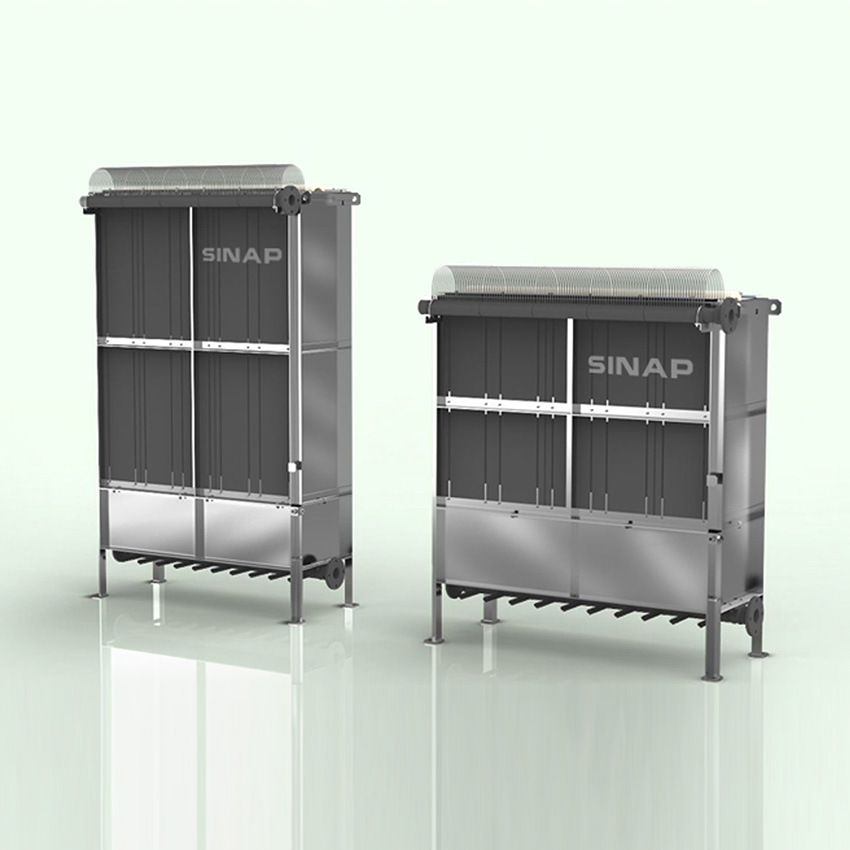
Engineers face a common evaluation dilemma at the beginning of a project. You must choose between hollow fiber (HF) and flat sheet (FS) configurations. Both approaches utilize membrane bioreactors. However, their physical structures dictate completely different operational realities. We must objectively compare them to ensure correct plant design.
Hollow fiber systems feature thousands of spaghetti-like strands. They offer distinct advantages and severe limitations. On the positive side, they provide extremely high surface area. They also require lower aeration energy per unit area. However, HF realities often frustrate operators. They are highly prone to mechanical damage. They act sensitively to rough debris. They demand strict pre-screening below 1mm. Furthermore, they are susceptible to fiber tangling. Hair and fibrous waste cause severe "sludge braiding" that ruins modules.
Flat sheet realities present a different operational paradigm. Their primary advantage lies in unmatched physical robustness. The rigid plates will not tangle. Operators find them much easier to visually inspect. You can clean them mechanically if necessary. They remain highly resistant to internal pore blocking. They easily tolerate rougher pre-screening between 1mm and 3mm. Their main disadvantage is a lower packing density. They offer less surface area than HF modules. Therefore, they require slightly more tank volume per module.
The selection verdict heavily favors the flat plate design for specific scenarios. We position flat sheet MBR membranes as the superior choice for small-to-medium industrial plants. They excel when treating high-viscosity effluents. They serve facilities prioritizing continuous uptime over maximum surface area. When maintenance labor is expensive, the flat plate design wins easily.
Comparison Matrix: Hollow Fiber vs. Flat Sheet Configurations | ||
Feature | Hollow Fiber (HF) | Flat Sheet (FS) |
|---|---|---|
Pre-screening Requirement | < 1 mm (Strict) | 1 - 3 mm (Flexible) |
Mechanical Robustness | Low (Prone to breaking) | Very High (Rigid structure) |
Sludge Braiding Risk | High | Zero |
Surface Area Density | Very High | Moderate |
Fouling remains the enemy of any membrane system. Managing high MLSS is critical to preventing this. Flat sheet systems actually perform optimally at higher MLSS concentrations. We recommend targeting 12 to 15 g/L. This higher concentration might seem counterintuitive at first. However, the dense sludge-air mixture provides a distinct advantage. It creates optimal shear force across the rigid flat plate. This thick mixture rubs against the membrane surface. It generates a powerful, self-cleaning scrubbing effect.
Aeration and air scouring drive this cleaning mechanism. Operators apply continuous air scouring from the bottom of the module. Coarse bubbles rise aggressively between the parallel plates. This upward lift prevents cake layer buildup. The constant physical scrubbing keeps pores open. Because of this, you avoid complex mechanical interventions. You eliminate the frequent back-pulsing required by other membrane types. This simpler operation reduces pump wear. It also streamlines the automation logic of the plant.
Commissioning and startup present unique risks. Biological systems require time to mature. Typical startup challenges include aggressive foaming. You might also face premature fouling before the biomass matures properly. A weak sludge matrix cannot scrub the plates effectively.
Follow these specific strategies to control startup risks:
Seed the reactor properly: Import healthy biomass from a similar industrial facility to jumpstart the culture.
Control the initial flux: Maintain flux strictly below the critical flux threshold during biological acclimation.
Maximize air scouring: Apply maximum allowable air scouring while MLSS remains low to prevent deposition.
Manage early foaming: Design overflow weirs to capture foam. Route this foam safely back to the dewatering system.
Monitor PID loops: Tune your suction pumps carefully to prevent sudden pressure spikes across the fresh membranes.
Water scarcity forces industries to rethink wastewater. It is no longer just a disposal liability. It represents a valuable resource. Strict compliance and quality standards mandate advanced filtration. The precise pore sizing of these plates guarantees safety. They typically operate in the Ultrafiltration or Microfiltration ranges. This fine porosity acts as an absolute physical barrier. It intercepts bacteria, suspended solids, and large organic molecules. The resulting effluent consistently exceeds stringent municipal discharge limits.
This high purity allows for direct RO integration. Many facilities want to achieve zero liquid discharge (ZLD). To do this, they rely on Reverse Osmosis (RO) systems. However, RO membranes clog easily. They require pristine feed water. Our flat sheet MBR membranes for wastewater reuse deliver exactly this. The permeate features an exceptionally low Silt Density Index (SDI). An SDI below 3 is usually required. This makes MBR permeate the ideal direct feed for RO systems. You completely bypass intermediate filtration steps.
This technology drives a massive ESG and sustainability impact. Corporate sustainability goals demand real-world action. These filtration plates enable closed-loop water recycling. The automotive, textile, and food & beverage sectors use this daily. They wash products, treat the water, and reuse it entirely. This approach minimizes harmful chemical discharge into local rivers. It lowers municipal water intake. Furthermore, it facilitates potential resource recovery. You can extract valuable phosphorus or energy from the highly concentrated sludge.
Engineering decisions always involve financial scrutiny. We must transparently address CAPEX versus OPEX. Flat sheet modules require a competitive but sometimes higher upfront capital cost. They use more plastic and require sturdy frames. However, they rapidly offset this initial investment. They drastically reduce manual cleaning labor. They require fewer chemical recovery cleans (CIP) over their life. They suffer almost minimal replacement due to mechanical breakage. You spend slightly more to build it, but significantly less to run it.
Lifespan expectations must remain realistic and verifiable. Operators demand predictability. We set a verifiable expectation of 5 to 7 years of operational life. This lifespan assumes standard industrial conditions. It is heavily contingent on proper maintenance. You must adhere to prescribed chemical cleaning protocols. Routine sodium hypochlorite and citric acid maintenance clears deep fouling. If you ignore chemical cleaning, pressure builds up. This pressure will eventually stress the PVDF beyond recovery. Proper care ensures the 7-year target.
Smart system design guarantees continuous production. We recommend the EPA-standard "N+1" design redundancy philosophy. You must include one fully redundant membrane train in the plant layout. Do not design a plant that needs every module running 24/7. An N+1 system ensures zero facility downtime. You can take one train offline for scheduled chemical cleaning. The remaining trains absorb the flow. Furthermore, this design handles unexpected peak flow events safely. The plant comfortably handles 1.5x to 2x average design flows without overflowing.
System Operating Parameters Summary Chart | |
Design Parameter | Recommended Target Range |
|---|---|
Optimal MLSS Concentration | 12 - 15 g/L |
Expected Membrane Lifespan | 5 - 7 Years |
Peak Flow Capacity | 1.5x - 2.0x Average Flow |
Pre-Screening Mesh Size | 1 - 3 mm |
Selecting the right hardware partner determines long-term success. Procurement engineers face a crowded market. You need a reliable vendor shortlisting logic. You cannot base decisions purely on the lowest module price. The hidden costs of poor support ruin budgets quickly.
Use this checklist to evaluate a flat sheet membrane manufacturer:
Material Transparency: Do they explicitly state their material origin? Ensure they use virgin PVDF rather than recycled composites. Virgin material guarantees flexibility and longevity.
Customization & Retrofitting: Can their modules directly replace existing blocks? Check if their frames fit your current tanks. You want to avoid major civil concrete works during a retrofit.
Technical Support: Do they offer active commissioning support? Ask if they provide PID tuning guidance. Ensure they offer clear fouling control guidelines during the highly critical startup phase.
Warranty & Guarantees: Read the fine print of the warranty. Are membrane lifespan guarantees tied to realistic operational parameters? Reject warranties that void easily under normal industrial fluctuations.
Industrial wastewater demands resilient engineering. Flat sheet MBR membranes are not a magical silver bullet. They require competent operation and diligent chemical maintenance. However, they represent the most mechanically reliable filtration choice available today. They excel specifically in high-fouling industrial wastewater applications. They eliminate fiber tangling. They forgive rougher debris. They slash your secondary clarifier footprint.
We encourage environmental engineers to conduct a baseline audit today. Look closely at your current MLSS levels. Measure your physical footprint constraints. Calculate your annual downtime costs due to clarifier upsets or fiber breaks. If your numbers look poor, an upgrade yields a highly positive ROI. Switching to flat plates stabilizes your entire biological process.
Take action on your plant optimization. Download our technical specification sheets to compare dimensions. Request a short-term pilot test to validate effluent quality on your specific wastewater. Contact our engineering team directly. We will provide a site-specific system sizing and thorough lifecycle cost analysis.
A: With routine air scouring and scheduled chemical cleaning, industrial flat sheet membranes typically last 5 to 7 years before permeability drops below viable operational thresholds.
A: Unlike hollow fibers, flat sheets rely on the friction and shear force generated by a thick sludge/air mixture (12-15 g/L) moving upward across the plate to continuously scrub the membrane surface and prevent fouling.
A: Yes. The PVDF material used in most flat sheets is highly chemically resistant. However, the biological reactor must be properly acclimated to the specific industrial toxicity to ensure the biomass survives to break down the organics before filtration.
A: Generally, no. Flat sheet membranes typically rely on relaxation periods (brief pauses in permeation) combined with continuous air scouring to clean the surface, whereas hollow fibers require active back-pulsing with permeate.


