

close
Choose Your Site
Global
Social Media


Views: 0 Author: Site Editor Publish Time: 2025-11-04 Origin: Site


The global water crisis is one of the defining challenges of our era. While continental cities grapple with infrastructure and capacity issues, small islands face a unique and existential paradox: they are surrounded by water, yet often struggle with acute freshwater scarcity and the environmental burden of wastewater discharge.
Islands—especially popular tourist destinations like those in the Mediterranean—experience dramatic, seasonal fluctuations in population. This dynamic places immense stress on limited freshwater resources and existing sewage infrastructure. Traditional wastewater treatment methods often fail to meet the high standards required for discharge into sensitive marine ecosystems, nor can they handle the abrupt shifts in hydraulic and organic loading. The need for a solution that is compact, highly efficient, robust, and capable of producing water suitable for reuse has never been more pressing.
Enter the Membrane Bioreactor (MBR) technology, a process that has rapidly become the gold standard for high-quality wastewater treatment. Within the MBR landscape, Flat Sheet MBR systems stand out, particularly for challenging, space-constrained applications like island communities.
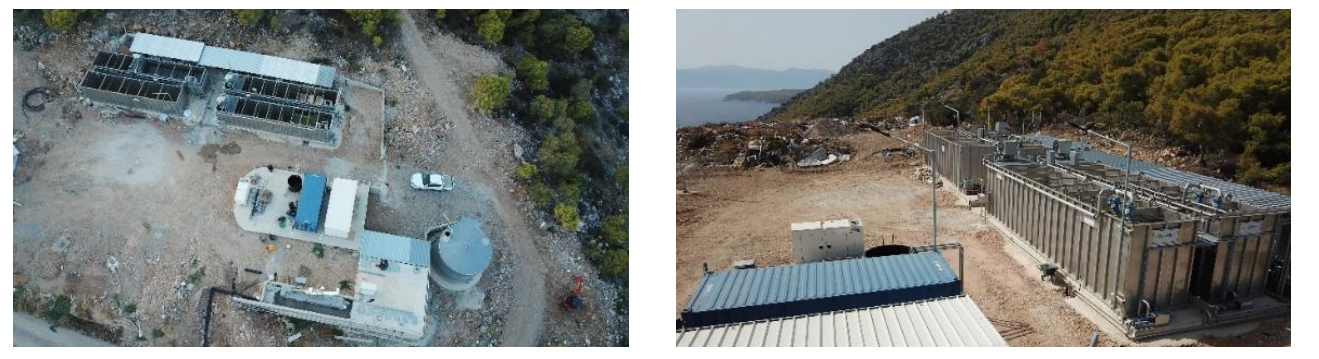
This case study is a testament to the transformative power of this technology. We delve into the successful commissioning of a cutting-edge Compact MBR System on Agistri Island, Greece, powered by SINAP Flat Sheet MBR Modules. The project, completed in 2023 in partnership with a leading Greek engineering firm, ECOTECH, serves as a blueprint for sustainable water management in vulnerable, high-value coastal regions globally.
Throughout this extensive article, we will explore the technical superiority of Flat Sheet MBR, detail the bespoke design that solved Agistri’s specific challenges, analyze the exceptional performance data, and connect this local triumph to the broader global imperative for sustainable water security. This deep dive will illuminate why the SINAP 80-120 module was the ideal choice, and how its integration established a new benchmark for municipal MBR wastewater treatment in the Aegean Sea.
To appreciate the success of the Agistri project, one must first understand the specific obstacles that islands, especially tourist hubs, must overcome. The need for specialized Island Wastewater Treatment is critical.
Agistri, a beautiful island close to Athens, is a magnet for tourists during the summer months. Its resident population is small, but during peak season, the effective population equivalent can surge by hundreds or even thousands. This seasonal tourism creates an operating environment characterized by high-strength sewage.
Impact: Wastewater inflow volume (Hydraulic Load) and concentration (Organic Load) can change drastically overnight. Traditional treatment plants struggle to adapt to these rapid shifts, leading to system upsets and regulatory non-compliance. A successful system must be inherently robust and designed with operational flexibility.
Islands, by definition, have highly constrained real estate. Building large, sprawling wastewater treatment facilities is often impossible or prohibitively expensive, especially in mountainous or historical areas.
Requirement: The solution must be a Compact MBR System that minimizes the physical footprint while maximizing treatment capacity—a core advantage of MBR over Conventional Activated Sludge (CAS).
The economy and ecology of islands are intrinsically linked to the health of the surrounding sea. The Mediterranean is a sensitive marine ecosystem. Discharge into this environment requires the highest quality treated water, often stricter than continental standards, to prevent eutrophication and ensure the safety of bathing waters. The plant must achieve High Effluent Quality consistently.
Every drop of freshwater on an island is precious. Treating wastewater to a quality that allows for Water Reuse (e.g., irrigation of green spaces, non-potable applications) is a crucial step toward achieving water independence and mitigating local water scarcity. MBR technology consistently produces effluent suitable for immediate tertiary applications.
It is clear that a conventional approach was insufficient. Agistri Island required a next-generation solution: the Flat Sheet MBR Systems technology provided by SINAP.
The Membrane Bioreactor (MBR) combines the strengths of conventional biological treatment (activated sludge) with advanced membrane filtration. This synergy is what unlocks the high performance demanded by projects like Agistri.
In a traditional CAS system, treated water separation relies on gravity settlement in a secondary clarifier. This limits the concentration of activated sludge (MLSS) that can be maintained in the biological reactor.
In an MBR Technology system, the secondary clarifier is entirely replaced by a physical membrane barrier. This barrier allows for:
High Biomass Concentration (MLSS): The system can operate with an MLSS concentration of 8,000 to 12,000 mg/L or higher. More "bugs" mean a faster, more effective breakdown of organic pollutants (BOD).
Complete Solids Separation: The membranes physically block all suspended solids, ensuring an effluent virtually free of total suspended solids (TSS).
MBR is inherently superior for island projects due to its ability to achieve High Effluent Quality in a significantly reduced footprint compared to CAS, making it the superior choice for any successful Compact MBR System deployment.
While MBR is the overall solution, the specific membrane configuration is crucial. SINAP specializes in the Flat Sheet MBR design, which offers significant, often overlooked, advantages over Hollow Fiber membranes, especially when dealing with the high-strength, variable sewage found in tourist areas.
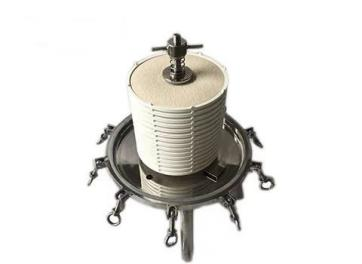
The Flat Sheet MBR module consists of a rigid or semi-rigid supporting frame upon which membrane sheets are layered. Wastewater flows between these sheets, and treated water is sucked through the membrane surface.
SINAP, with its deep history in membrane research, has refined this technology, resulting in the high-performance SINAP 80-120 Modules specified for the Agistri project.
Fouling—the clogging of the membrane pores—is the biggest challenge in MBR operation. Flat Sheet technology tackles this head-on:
Optimized Air Scouring: Flat Sheet membranes are cleaned from the bottom using a continuous, vigorous stream of coarse bubble air. This air creates a turbulent 'scrubbing' action that constantly shears off accumulated solids from the membrane surface, providing excellent Fouling Resistance.
Wider Channels: The wider, non-fiber-bundle channels in Flat Sheet modules are less prone to trapping hair, grit, and large fibrous solids—common issues in municipal sewage—reducing the likelihood of physical clogging.
The construction of the SINAP Membranes module prioritizes longevity:
Robust Structure: The membrane sheets are internally supported by a non-woven, rigid material. This robust design makes the membrane sheets significantly more resistant to physical abrasion and tears, resulting in reduced maintenance costs and fewer unplanned replacements.
Due to the efficient air scouring and inherent resistance to bio-fouling, Flat Sheet MBR Systems maintain a more stable, long-term flux rate. This means the MBR tank size can be reliably minimized, which directly contributed to the "Compact" nature of the Agistri system.
The specific SINAP 80-120 Module deployed at Agistri was chosen for its optimal balance of membrane surface area, mechanical strength, and hydraulic design. It offers maximum packing density suitable for Submerged MBR applications, ensuring the plant operates efficiently at its designed capacity of 3,000 Population Equivalent (PE) with a total membrane surface area of 1,152 m².
The success of the Agistri installation is not just about the membrane technology; it is also about the intelligent, flexible engineering design implemented by ECOTECH and SINAP. This Agistri Island Project is a model for Island Wastewater Treatment.
| Metric | Detail |
|---|---|
| Project Name | Agistri Island MBR Plant |
| Location | Agistri, Greece (Mediterranean) |
| Application | Municipal/Residential Sewage |
| System Configuration | Submerged, Compact MBR System |
| Total Capacity | 3,000 Population Equivalent (PE) |
| Membrane Product Used | SINAP 80-120 Flat Sheet Modules |
| Commissioning Date | 2023 |
The most elegant aspect of the Agistri plant is its ability to adapt to the island’s fluctuating population. The MBR reactor was not built as a single, rigid unit, but was segmented into three independent, parallel operational lines to allow for Flexible Operation:
Line 1: 750 PE Capacity
Line 2: 750 PE Capacity
Line 3: 1,500 PE Capacity
This compartmentalized design ensures that the system always runs optimally, maximizing the efficiency of the biological process and the membranes, while critically reducing operational expenditure (OPEX) during the slow season—a key financial benefit for any Municipal MBR utility.
The compact plant includes comprehensive treatment stages: Pretreatment, the Membrane Bio Reactor (MBR) using SINAP Flat Sheet MBR, UV disinfection, and a Sludge Dewatering Unit. The result is a robust, resilient, and remarkably Compact MBR System solution perfectly tailored for the challenging environment of a popular Greek island.
The true measure of a wastewater treatment system is its output quality. The Agistri project's performance data unequivocally validates the choice of SINAP Flat Sheet MBR Technology for high-strength, variable High-strength sewage treatment.
| Water Quality Indicator | Influent (Before Treatment) | Effluent (After Treatment) | Required Reduction | Implications |
|---|---|---|---|---|
| BODS (mg/l) | 350 mg/l | < 10 mg/l | > 97% | Excellent removal of organic matter. |
| TN (Total Nitrogen) (mg/l) | 700 mg/l | < 10 mg/l | > 98% | Exceptional Total Nitrogen Removal, crucial for preventing eutrophication in the Aegean Sea. |
| TSS (Total Suspended Solids) (mg/l) | 410 mg/l | < 2 mg/l | > 99.5% | Virtually all solids removed, ensuring water clarity. |
The exceptional Effluent Quality achieved, particularly the Total Nitrogen Removal from an influent of 700 mg/l down to less than 10 mg/l, is an outstanding technical achievement. This ensures that the treated water can be discharged with minimal ecological impact, protecting the pristine Mediterranean environment.
The final output quality is significantly better than what is achievable by conventional means. This high-purity water is immediately suitable for non-potable reuse applications, showcasing its excellent Water Reuse Potential and supporting the island’s water independence.
The Agistri Island MBR project is a powerful demonstration of how advanced SINAP Membranes technology, combined with intelligent engineering design, can solve complex water challenges in some of the world's most sensitive and logistically challenging locations.
Shanghai SINAP Membrane Tech Co., Ltd. is committed to being a dedicated and responsible contributor to addressing global water scarcity and pollution. Our mission, to be a global leader in separation membrane technology, is embodied in projects like Agistri, where our robust Flat Sheet MBR Systems provide reliable, sustainable water solutions, and economically viable solutions.
The lessons learned from this project—that robust Flat Sheet MBR systems offer the mechanical strength, fouling resistance, and flexible operation necessary to handle the volatile loads of a tourist-driven economy—are applicable across coastal zones, remote resorts, and rapidly developing municipal areas worldwide.
As Global Water Scarcity continues to grow, the MBR Technology pioneered by SINAP is essential for delivering quality water to communities and preserving Earth's ecosystems for future generations. The Aegean Sea is now a little safer, thanks to the innovation delivered by the SINAP 80-120 Flat Sheet MBR module.
Need a Custom, Compact MBR Solution for Your Challenging Wastewater Project? Contact the experts at Shanghai SINAP Membrane Tech Co., Ltd. today to discuss how our globally proven Flat Sheet MBR Systems technology can secure your community’s water future.


