

close
Choose Your Site
Global
Social Media


Views: 0 Author: Site Editor Publish Time: 2025-11-13 Origin: Site


At Shanghai SINAP Membrane Tech Co., Ltd., we specialize in delivering robust and reliable separation membrane solutions, particularly for the world's most demanding wastewater applications. The food, beverage, and dairy sector frequently presents some of the toughest challenges due to extremely high organic and solids content. Our mission is to provide technology that not only meets but exceeds the performance required for stable environmental compliance.
A prime example of this commitment is the successful Membrane Bioreactor (MBR) retrofit we completed in 2021 at the OVOPRODUCTOS Plant in Spain, a major producer in the egg industry. This facility processes 185 cubic meters of wastewater daily, a stream notorious for its difficulty due to the nature of egg processing byproducts. Since 2009, OVOPRODUCTOS had relied on a conventional MBR system utilizing hollow fiber membranes. However, like many operators in high-strength industrial environments, they began to experience the operational limitations of that system.
The wastewater stream at OVOPRODUCTOS was characterized by pollutant concentrations that put severe stress on the existing hollow fiber membranes:
Extreme Organic Load: The Chemical Oxygen Demand (COD) was measured at an exceptionally high 11,500 parts per million. Similarly, the Biochemical Oxygen Demand (BOD) was 6,500 parts per million. This high concentration of organic matter fuels rapid microbial growth and creates conditions ripe for biological fouling.
High Solids Content: With Total Suspended Solids (TSS) at 2,350 milligrams per liter, the environment was highly erosive and prone to physical clogging.
In these conditions, hollow fiber membranes, with their fine structure and tightly packed configurations, are highly susceptible to clogging, often leading to flux decline, increased chemical cleaning frequency, and operational instability. Our local business partner in Navarra, Spain, Prosimed, was engaged by OVOPRODUCTOS to find a permanent solution to improve wastewater treatment performance and guarantee reliability. Our team’s analysis quickly pointed to the membrane geometry as the core issue.
We proposed a complete strategic pivot: replacing the struggling hollow fiber membranes with our highly resilient flat sheet membrane technology. Our flat sheet MBR modules are specifically engineered to withstand the challenging conditions typical of high-solids industrial wastewater, offering several distinct advantages that solved OVOPRODUCTOS’s operational headaches:
Fouling Resistance: Our flat plate design inherently resists clogging. The wide, uniform channels between the membrane sheets allow high-solids sludge to pass freely, preventing the accumulation that plagues hollow fiber systems.
Superior Air Scouring Efficiency: The rigid, flat surfaces of our modules allow for highly effective and continuous air scouring. This gentle yet powerful scrubbing action prevents the build-up of the fouling layer, maintaining stable, long-term flux rates crucial for continuous industrial operation.
Mechanical Durability: Built with superior materials and construction, our flat sheet modules offer excellent mechanical integrity, ensuring longevity and reducing the risk of damage in the turbulent environment of the bioreactor.
For this specific project, we supplied 720 square meters of our robust SINAP 150-160 Modules. This ensured a seamless retrofit into the existing submerged MBR configuration, minimizing downtime and construction complexity.
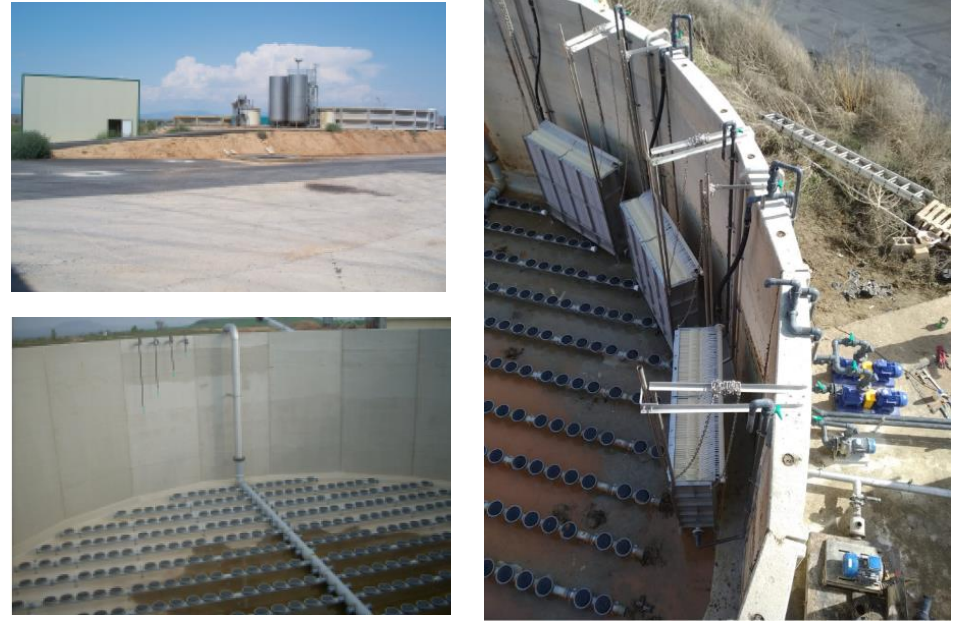
The retrofit was successfully completed in 2021. The subsequent performance data immediately validated our membrane choice, demonstrating our technology's ability to not only handle the extreme organic load but also produce exceptionally clean water.
The results we delivered for OVOPRODUCTOS were transformative:
COD Removal: We reduced the COD load from 11,500 parts per million to less than 125 parts per million in the effluent.
BOD Reduction: The high BOD of 6,500 parts per million was consistently brought down to below 35 parts per million.
TSS Control: The problematic Total Suspended Solids level of 2,350 milligrams per liter was dropped to below 35 milligrams per liter.
These figures represent a near-total pollutant removal and demonstrate the reliable, long-term stability that our technology provides. By guaranteeing these high effluent standards, we ensured OVOPRODUCTOS not only met Spanish environmental regulations but gained a competitive advantage through stable, low-maintenance operation.
The OVOPRODUCTOS case is a powerful testament to our core vision: to be a global leader in separation membrane technology and a responsible contributor to addressing water scarcity and pollution. This project underscores the superior performance of our flat sheet MBR technology in one of the most demanding industrial segments—food processing wastewater.
We are proud to partner with companies worldwide to turn their complex wastewater challenges into opportunities for sustainable and efficient operation. Our focus on product research, development, and delivering high-quality, reliable membrane solutions ensures that we continue to drive technological progress and help industries achieve their environmental goals. The success in Spain confirms that when the challenge is high-solids, high-organic industrial wastewater, our SINAP flat sheet MBR is the solution of choice.


